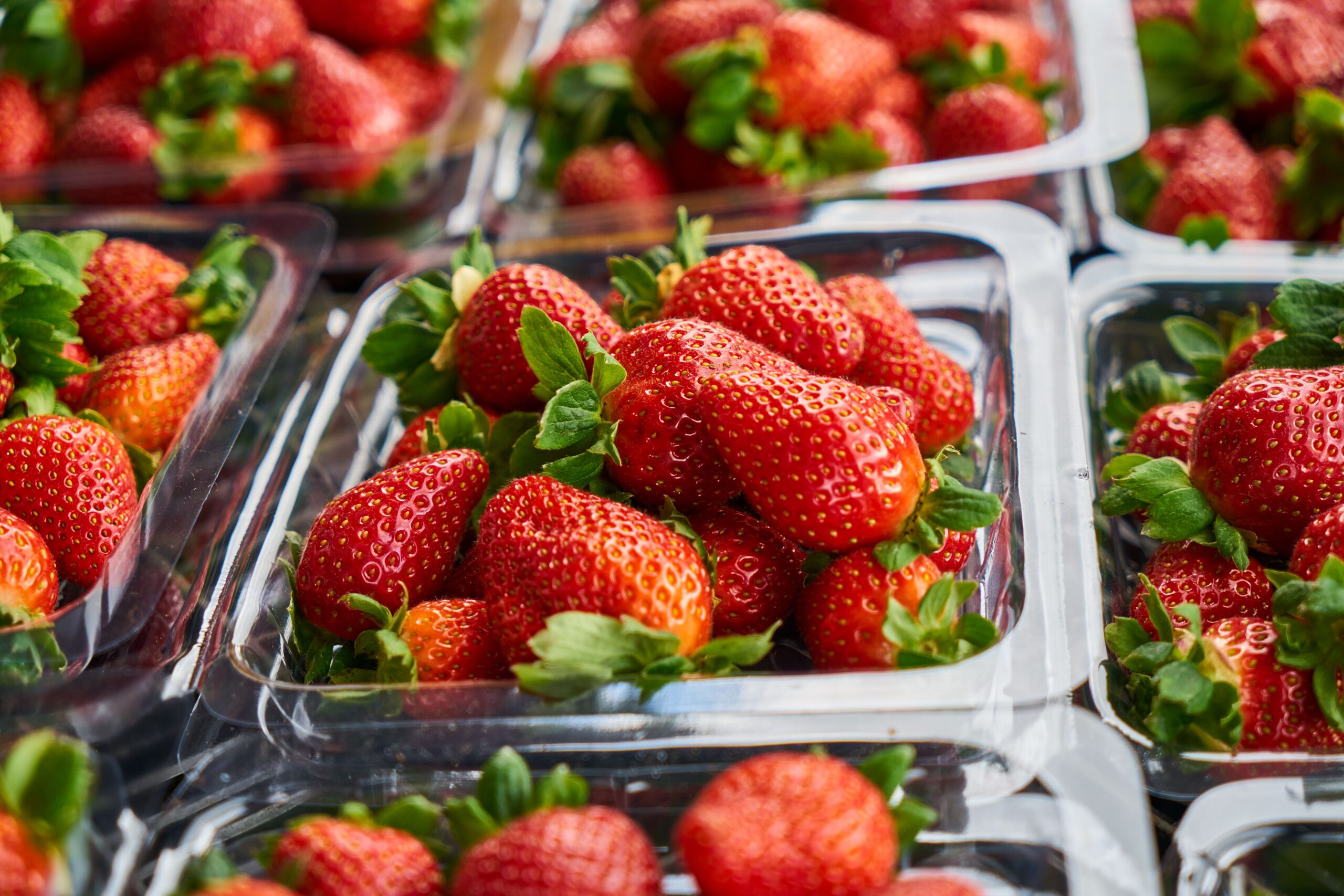
A punnet of strawberries has been redesigned at least three times over the past decade: once to be biodegradable, once to be recyclable, and now, potentially, banned outright if it weighs less than 1.5kg. That regulatory whiplash captures a tension running through the EU’s plastics and packaging agenda that is easy to miss amid application dates and delegated acts: rules designed to cut packaging waste can work against the food waste those same packages exist to prevent, while the companies investing in bio-based, biodegradable, or recyclable alternatives are being asked to commit capital to a regulatory target that is still evolving.
A packaging fix without a food waste answer
The Packaging and Packaging Waste Regulation (PPWR), applicable since 12 August 2026, sets binding EU-wide rules on recyclability, minimisation and material composition, replacing decades of country-by-country transposition under the 1994 Packaging Directive. Its format restrictions reach well beyond any single category of food: for instance, from 1 January 2030, those restrictions will restrict certain single-use plastic packaging – including bio-based and biodegradable formats that do not meet its recyclability criteria – for unprocessed fruit and vegetables under 1.5kg, individual portions of condiments, sauces, sugar and coffee creamer, and food and drink filled and consumed on site in hotels, bars and restaurants, among other formats. Those restrictions now sit alongside a separate, binding obligation with a theoretically related objective but a different mechanism: the targeted revision of the Waste Framework Directive. In force since October 2025, it requires Member States to cut food waste by 10% in manufacturing and processing and by 30% per capita at retail and consumption by 2030, against a 2021-2023 baseline.
Industry groups have argued publicly that the PPWR’s format restrictions were not accompanied by a dedicated impact assessment of their effects to shelf life and spoilage across food categories. The EU generates an estimated 59 million tonnes of food waste a year. Yet the Commission’s own impact assessment estimated the PPWR’s net emissions benefit at less than 1% of annual EU CO2 emissions.
Whatever the merits of that critique, it points to a genuine coherence gap: the Regulation is removing or restricting certain categories of protective packaging on a fixed timeline, while the Directive is placing a binding food waste target on the same Member States. Yet the interaction between the two policies, including any effect that those packaging restrictions could have on food waste, has not been fully quantified.
A regulatory hierarchy that keeps changing
The PPWR’s answer to which materials can substitute for banned or non-recyclable plastic is narrower than it appears, and narrower than it was a decade ago. Biodegradable and compostable plastics are now confined to a short list of specific applications, such as tea bags, coffee capsules, stickers on fruit and vegetables, and very lightweight carrier bags, while other packaging is increasingly expected to meet recyclability requirements. A decade ago, the question was still open. The EU’s 2018 Plastics Strategy described biodegradable materials as an area of “opportunities and risk” and bio-based feedstocks as welcomed alternatives to avoid using fossil resources. However, it made conditional any conclusion on life-cycle assessments showing when bio-based, biodegradable, or compostable plastics offered any environmental benefits compared with existing options, while directing its funding towards making plastics smarter and more recyclable rather than more bio-based or biodegradable.
The PPWR settled that open question in recyclability’s favour for all but a handful of applications. For a sector where a new packaging line, feedstock contract, or fermentation facility can take a decade to pay back, the shift in objective between biodegradability and recyclability is not a minor recalibration: it changes which technologies are likely to meet future compliance requirements and be eligible for incentives, and therefore where companies may be willing to invest.
The innovation is there; the incentive signal is not
This is not a story about a lack of alternatives. European start-ups already produce mycelium-based packaging from agricultural by-products, casein-based biodegradable films, and other bio-based food-contact materials. Bio-based ‘drop-in’ plastics such as bio-PE are chemically interchangeable with conventional plastic while running on renewable feedstock. The bigger question is whether the EU’s regulatory framework provides a sufficiently stable signal for which pathways are likely to be incentivised.
Bioplastics still account for under 1% of total plastic packaging placed on the EU market, a figure that reflects cost and infrastructure gaps as much as the technology itself. Industry has argued that the PPWR’s implementing guidance, released only months before the Regulation’s application date, still falls short of the legal certainty businesses need, making long-term investment decisions more difficult. Meanwhile investors managing more than EUR 28 billion in assets have separately urged the Commission not to reopen the Regulation, warning that doing so would increase uncertainty and reduce investment flows rather than resolve the sector’s compliance concerns.
For bio-based innovators, this means navigating a policy hierarchy that has already inverted once and could move again once the PPWR’s delegated acts on recycled content and design-for-recycling criteria land.
The same uncertainty, one step earlier in the chain
That same regulatory incoherence shows up in agriculture, treating plastic and food waste inconsistently across the value chain. The Single-Use Plastics Directive (SUPD) covers a substantial share of food-related plastic, including food containers, cups, cutlery and plates, while the PPWR has introduced additional restrictions on packaging formats. But neither the SUPD nor the PPWR, both aimed at packaging and consumer-facing items, extends to the plastic used earlier in the chain, in primary production. Europe uses 722,000 tonnes of agricultural film a year for mulching, greenhouse cover and silage. Yet under a quarter of the non-packaging share is currently recycled, while recycling of mulch film is particularly limited.
A 2024 delegated act under the Fertilising Products Regulation gave biodegradable mulch film its own soil-degradation threshold. Still, this sits on a separate legal track from both the packaging and single-use rules, and collection remains a patchwork of national, largely voluntary schemes. The SUPD itself faces a legally mandated evaluation due by July 2027. The review will test whether its restrictions still cohere with the newer, broader PPWR list they were designed to complement.
None of these threads are being resolved on the same timeline or in the same piece of legislation. For companies weighing where to put capital into food-contact material innovation, the practical signal is clear: the regulatory direction of travel favours recyclability for now. But the EU has changed its preferred pathway before. And the gap between packaging policy and food waste policy is still open enough that a further shift, or a widened exemption list, is a live possibility rather than a settled outcome.
-

Léa works in the Environmental Practice with a focus on circular economy, product and waste policies, supporting clients in developing public affairs campaign. Prior to joining FleishmanHillard EU in January 2023, she worked at a public affairs consultancy where she developed a thorough understanding of...
-

Davide works with different clients within the Environmental and Chemical practice, focusing on chemical, agrifood, and trade policy issues within the broader sustainability agenda. Prior to joining FleishmanHillard, Davide gained experience at the European Federation of Chemical Industry (Cefic), where he worked within the Trade...