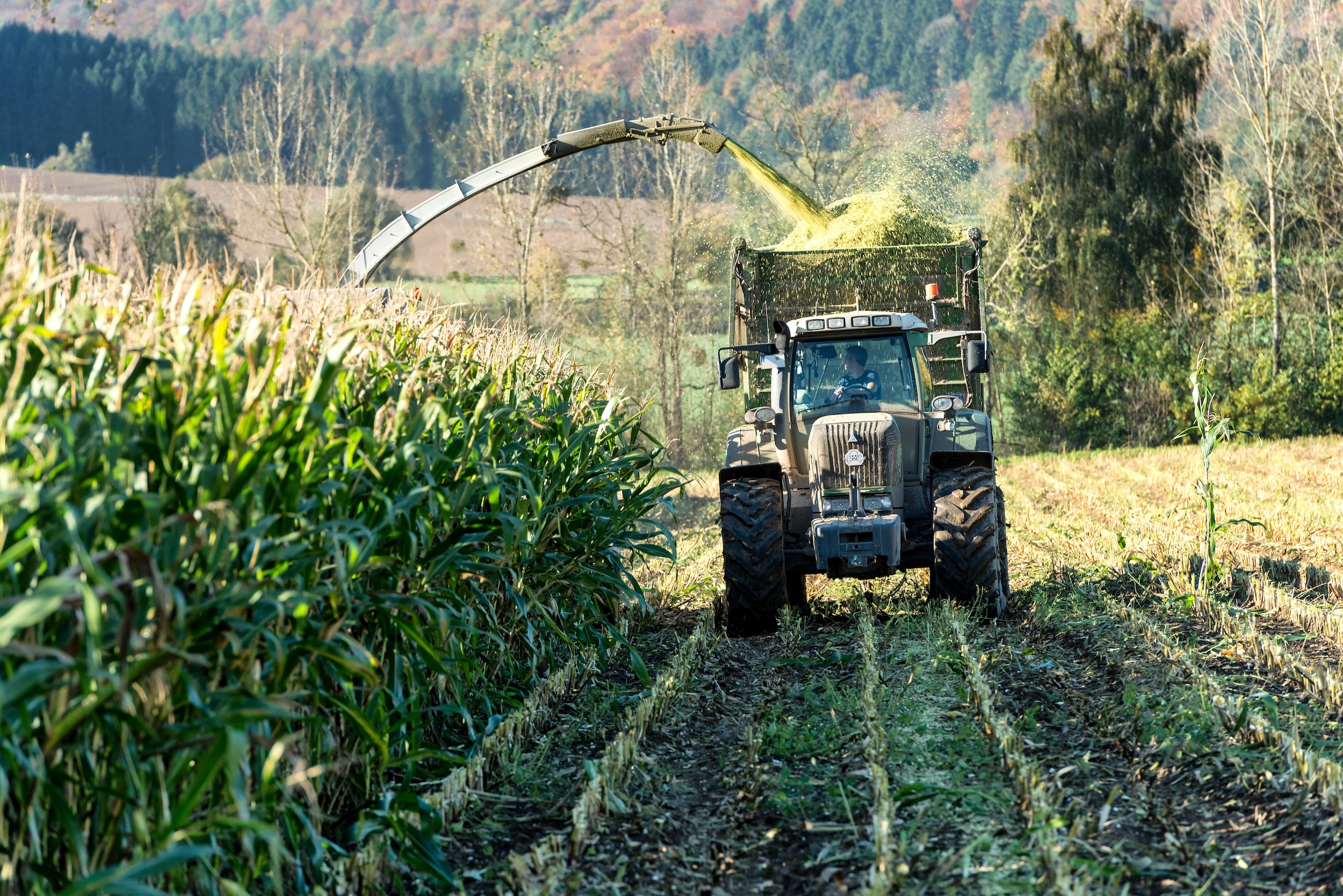
Europe’s agriculture is no longer a stranger to severe weather events. This year, cereal harvests arrived six weeks early, and COCERAL estimates the total harvest to be almost 25 million tons lower than last year. French maize crop ratings have fallen to their lowest in 13 years, and 83% of winter barley in France was harvested by 3 July. Crops and ecosystems have been devastated by wildfires in Spain, France, Italy, Portugal and Greece.
European agriculture is facing a survival challenge on three fronts:
- Immediate survival – dealing with this year’s weather extremes, improving access to water, protecting the health of ecosystems;
- Economic survival – protecting yields and predictable revenue, supporting the agriculture sector’s viability;
- Long-term survival – making the structural shift towards more sustainable and resilient practices that protect European food security, and shielding supply chains from increasing climate and price volatilities, all while addressing the increasing pressures that farmers, ecosystems and the wider food chain will face.
While policymakers are trying to grapple these issues, the debate is marked by differing viewpoints among EU institutions and stakeholders, leading to mixed success.
Apples vs. Oranges – The differing policy perspectives
Since the beginning of this institutional mandate, with tractors lining Brussels’ streets, there has been heightened political pressure to support farmers. Reducing administrative burdens and enabling crisis payments through Omnibus III was quickly placed on the agenda. Yet, there have since been divisions between defenders of agri-environmental schemes in the post-2027 Common Agricultural Policy (CAP), and those who hope to dampen those ambitions in favour of food security, flexibility, and yield protection.
While the EU’s Common Agricultural Policy has traditionally sought to combine environmental objectives and long-term sustainability with food production, the post-2027 Commission proposal is shifting towards profitability, financing, and greater flexibility, with the aim to address immediate and economic survival. The previous nine EU-defined Good Agricultural and Environmental Conditions (GAECs) give way to “protective practices” defined by Member States, while ringfenced minimum spending requirements for environmental schemes would be removed, and eco-schemes that previously drew 100% EU funding would require national co-financing.
The direction of agriculture policy isn’t plain sailing in the EU institutions either. In Parliament, MEPs are diametrically opposed on what to prioritise going forward. MEPs on the left are pushing to maintain environmental conditionality and ringfenced funding for environmental schemes, while those further right are outright challenging the current environmental architecture. Meanwhile, seven Member States across the ‘dry belt’ are calling for the post-2028 crisis reserve to begin covering weather damage as a standard trigger, providing payouts to farmers sooner and addressing immediate survival challenges. France has pushed back on the proposal, maintaining that climate risk should be left to other instruments, while Agriculture Commissioner Hansen has argued that no realistic sum could cover all losses.
Among tense debates about the future of Europe’s agriculture policy, the question remains: who, how, and under which schemes will farmers be supported to transition and tackle the challenges they face, and will the blurring of EU targets or conditionality really help in the long term?
Water scarcity: Between EU resilience ambitions and national crisis responses
Water scarcity and access is the key issue for agriculture during droughts, with this challenge increasingly testing the EU’s ability to turn long-term resilience ambitions into action. While EU policy is moving towards a more strategic and integrated approach to water resilience, national responses often remain shaped by the urgency of immediate crises, raising questions about whether short-term solutions are addressing, or merely postponing, the longer-term challenge.
Ultimately, water resilience has a crucial role to play in food security, with sustainable food systems able to work hand-in-hand with improving water retention and water quality. In the long-term, the EU’s Water Resilience Strategy aims to reduce overexploitation and incentivises farmers towards better water management, and the Water Reuse Regulation is set for an evaluation, with a revision proposal expected in 2028.
But is the EU’s policy approach to long-term resilience going to address immediate needs on the ground, and are there trade-offs? Some Member States are already taking action. For example, while France’s July 2026 Agricultural Emergency Bill includes ambitious targets for doubling water storage by 2035, it also realigns water management and development plans to shift towards an ‘optimisation’ of usage and abstraction capacity, rather than efficiency or conservation.
While storage is a useful adaptation tool during droughts, supporting the redistribution of water by moving availability from when rain falls to when and where it is needed, it is also a claim rather than an addition to water resources. Moreover, the emergency agricultural law weakens protections for wetlands, which function as a natural water storage system, and equates economic and environmental uses of water when they compete.
But France isn’t alone, and farmers do need support. Even outside of the EU – for instance in the UK – farmers are calling for more flexible abstraction licenses, alongside plans to expand future water storage. This is particularly relevant in a country where irrigation remains relatively rare, but where future policy will need to address the challenge as heatwaves crawl increasingly further up the European continent.
A business model for sustainable survival
As farmers face pressure on incomes and policy is focusing on safeguarding food security, there is also an opportunity to strengthen the supply chain’s climate resilience and support the transition of the European agrifood system.
However, the EU needs to do more to strengthen frameworks that clearly tie together climate resilience, food security, and investment for agriculture. Drought aid is improvised, with national packages topped up by EU funds, negotiated case-by-case; most of it compensates losses rather than reducing future exposure.
There is movement, however, in Member State discussions on the next Multi-Annual Financial Framework and CAP. The absence of a coherent climate resilience plan has now been acknowledged, and the Commission is developing an integrated framework in response – not focused on agriculture alone, but a first attempt to connect climate risk, preparedness, and investment in one structure. Whether the agrifood sector’s needs are built properly into it remains unclear.
Sustainability, simplification, and survival are not competing agendas – the sector needs all three. And all three require a shift in practices, investment in infrastructure, and policy decisions that support the entire value chain. Practices once seen through a purely environmental lens are structurally shifting, under further extreme weather conditions, into operating-cost arguments. For businesses, investment in water resilience, carbon farming, and drought-tolerant sourcing are going to be required alongside eased burdens on farmers and improved incentives.
While this summer certainly provides cause for concern, and agriculture is facing an uncertain few years ahead, green shoots are beginning to show, just as they will re-emerge in fields currently battered by fires. For European ecosystems, food security, and competitiveness: policymakers and businesses must reach the right decisions within the next long-term budget and CAP, alongside future agriculture policy, to ensure those shoots are properly nurtured.
-

Jacob returned to the Environment Practice in 2025, having previously completed an academic placement there in 2023. Jacob supports clients on a range of issues, with a focus on Agrifood, Environment and Trade policy. Jacob holds a First Class Honours BA in Politics with International...
-

Meropi supports clients in Climate and Sustainability policies, while also focusing on Environmental and Chemical issues. Meropi has gained experience in the European Public Affairs field through her internship at a European Government Affairs Law firm in Brussels. She also worked as an intern in...