Bringing the Commission’s screening ambition to life
As part of the Safe Hearts Plan, the European Commission introduced the Know Your Numbers campaign, aiming to ensure every European knows their core heart health indicators by the age of 35 and makes routine health checks a lifelong habit thereafter.
To kickstart efforts towards this goal, the Commission announced the first-ever EU Screening Week would be organised from 28 September to 4 October 2026. Alongside the mobilisation of screening initiatives for key heart health indicators such as blood pressure, cholesterol, and blood sugar across the EU, the Commission’s message was simple: get checked, know your numbers, and take control of your health.
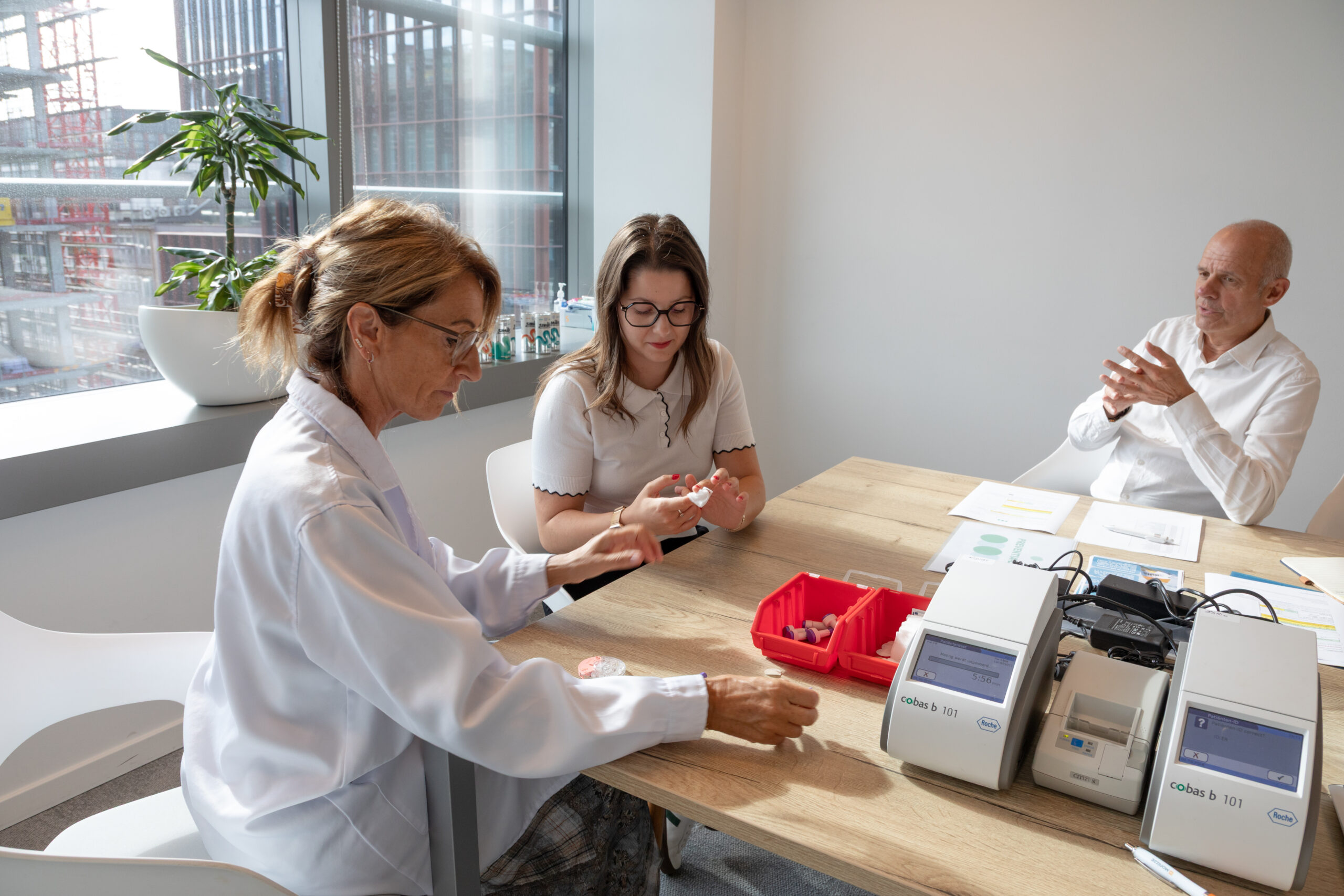
Having tracked developments related to the Safe Hearts Plan throughout the current mandate, we wanted to see what it would take to bring this culture of health awareness to life at FleishmanHillard EU.
We partnered with Preventia-Labs to organise a screening initiative in our office. They offer a quick, 10-minute check covering cardiovascular disease and type 2 diabetes risk factors, by assessing blood sugar, cholesterol and triglyceride levels. In addition to testing, their services included access to a medical professional who could explain the results and encourage participants to seek further medical care as needed. From a logistical standpoint, all we needed was a private room in our office and a dedicated budget to cover the cost of the services.
Beyond gaining knowledge about our own health and wellness indicators, we came away from the experience with three key learnings for our office.
Where there’s a will, you only need a way.
Interest in participating was much higher than we anticipated. Within 24 hours of announcing the initiative, all available slots were booked, and a waiting list was opened in case additional appointments became available. The vast majority of participating colleagues (83%) indicated that their motivation to participate was linked to a personal interest in their health. With appointments fitting easily between meetings, the process was accessible, convenient and stress-free for everyone involved. We observed that people are generally highly motivated to learn about their health; they just need opportunities to engage with the right services.
Health literacy is a continuous process.
Most participants had previously had at least some of their heart health indicators tested, with 37% having had their blood pressure tested, 24% their cholesterol and 21% their blood sugar. Only 18% of participating colleagues were either unsure or had never been tested before. Well over half of participants indicated that this was the first time a medical professional had explained what these numbers meant and their relevance to their health. This demonstrates that, in addition to testing, there is a valuable opportunity to create a space where people can ask questions and gain the knowledge needed to inform future decisions and habits.
There’s something for every age group.
We decided to track the age groups of participating colleagues according to the brackets proposed by the Commission as a framework for the types and frequency of tests recommended at different ages (under 35, 35–65 and 65+). Of our participating colleagues, 78% were in the youngest age bracket, while 22% were between the ages of 35 and 65. We also found that most participants (77%) do not currently receive annual check-ups, suggesting an opportunity to encourage more regular engagement with preventive health checks. While these types of health checks become increasingly relevant with age, it is important to start young so that individuals can track and engage with their numbers throughout their lives.
At the heart of our learnings is the recognition that there is a clear willingness to participate; screening simply needs to be accessible and integrated into everyday life. Encouraging a culture of health awareness is possible with a little creativity and coordination.
We look forward to bringing this initiative back to our office in future years – next time with even more appointment slots for our colleagues!
-

Haven is a policy and political outreach specialist who supports clients in health sectors by directing engagement with Brussels stakeholders. Prior to joining FleishmanHillard, she worked as head of office for a Member of the European Parliament on two committees: Environment, Public Health and Food...
-

Eva is a public affairs and policy communications professional who supports clients in the healthcare and medtech sector. Prior to joining FleishmanHillard, Eva was a Policy Communications Intern at Roche Diagnostics, supporting the policy team across the diagnostics and regulatory portfolios. She holds an Masters...