Last month, the European Union and India concluded over three years of negotiations on a long-awaited deal for a Free Trade Agreement. Across automotive, steel, chemicals, plastics, pharmaceuticals, and agri-food, the emerging EU-India trade agreement has the potential to significantly reshape trade flows between two major industrial powers.
Following the first and second part of our series on the EU-India FTA focused on pharmaceuticals and automotive and metals respectively, our next installment considers provisions related to the automotive and metals industry.
Francesca Rinaudo, Account Director, and Davide Bertot, Account Executive, FleishmanHillard EU
The agreement takes a pragmatic approach to agri-food trade, delivering meaningful tariff reductions and export opportunities while preserving protections for sensitive sectors and leaving geographical indications to future negotiations.
The treatment of agri-food in the EU-India trade agreement illustrates the pragmatic nature of a deal which balances political feasibility with economic optimisation. Rather than pursuing full liberalisation, negotiators opted for a calibrated approach based on compromises, exclusions and sequencing.
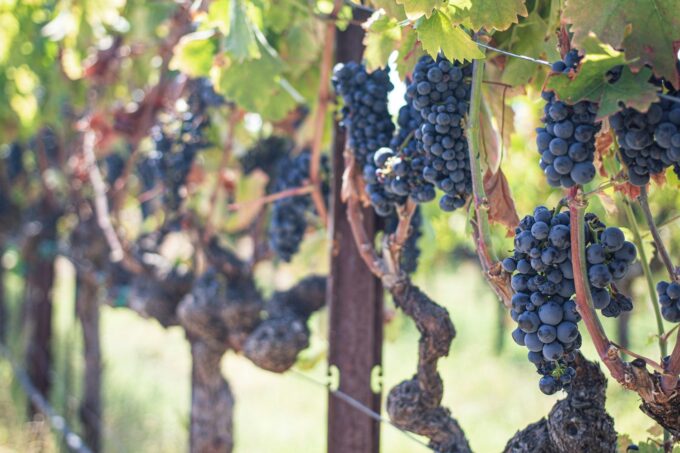
Economically, the agreement delivers tariff reductions on European food and beverage exports, creating new opportunities for European producers. Under the agreement, duties on wine are expected to fall from around 150% to roughly 20%, while tariffs on olive oil will fall from about 45% to zero. Processed foods such as bread, confectionery, pasta and fruit juices, previously subject to duties of up to 50% or more, will also see substantial reductions or full elimination.
At the same time, liberalisation remains intentionally limited. As politically sensitive sectors on both sides (e.g., rice, beef, sugar and dairy) are excluded, negotiators have opted for political acceptability over full market integration, particularly in light of other difficult trade negotiations such as EU-Mercosur. The inclusion of an agricultural safeguard clause, similar to those in other EU FTAs, further reflects this approach.
Geographical Indications (GIs) have been deferred to a separate negotiations process still underway. While pragmatic, this postponement carries risks, as GI protection is a key EU priority, particularly for wines, spirits and cheeses, and also for India on products such as Basmati rice.
Overall, EU stakeholders describe the agreement as balanced: tariff reductions offer export potential, while protective elements ensure political sustainability. The full benefits, however, will depend largely on implementation, regulatory cooperation and future progress on GIs and non-tariff barriers.
Monika Seth, Vice President, FleishmanHillard India
The agreement reflects a negotiated shift toward gradual liberalisation in alcoholic beverages, balancing European market access ambitions with India’s need to protect a predominantly domestic industry. By adopting phased tariff reductions and pricing safeguards, the agreement signals policy intent to open high-value consumer sectors without triggering abrupt market disruption. Tariffs on European wines and spirits are set to be gradually reduced over time, signalling a phased opening of the market rather than an immediate price shock.
For the EU, the agreement secures deeper access to one of the world’s fastest-growing premium alcohol markets. For India, the inclusion of safeguards including staggered duty reductions and minimum import price thresholds indicates a deliberate strategy to prevent sudden undercutting of domestic producers while encouraging competitive upgrading.
According to ISWAI, India’s alcohol market valued at just under $40 billion after growing 9% by value last year, remains overwhelmingly domestic, with imported spirits accounting for only about 2.6% of total volumes. Whisky continues to anchor consumption, while premiumisation and rising incomes are steadily expanding the opportunity for international brands.
Imports are nonetheless gaining visibility within the premium segment. India brings in roughly 10.9 million cases of alcoholic spirits, dominated by whisky, with Scotch accounting for about 81% of those imports highlighting both the category’s influence and its relatively small footprint within the broader market.
The competitive battleground is likely to shift from mass consumption to perception, positioning, and premium shelf space, as greater exposure to global benchmarks elevates expectations around quality and brand storytelling, potentially accelerating the sector’s ongoing premiumisation. However, structural constraints such as fragmented state excise regimes, pricing controls, and regulatory complexity are expected to moderate the pace of liberalisation, suggesting that tariff reductions alone may not create a fully frictionless market.
Ultimately, the FTA is less a disruptive force and more a strategic inflection point. Imports may not flood the market, but they will increasingly influence aspiration and category standards, signalling a gradual thinning of protectionism. For domestic producers, long-term competitiveness will hinge less on tariff insulation and more on brand strength, product quality, and adaptability within an increasingly globalised alcohol ecosystem.
This article is the third part in our series analysing the EU-India FTA. Stay tuned for more insights.
-

Francesca supports clients on circular economy policy, with a particular focus on packaging, ecodesign and agri-food. She has successfully run a number of legislative advocacy campaigns, helping clients to navigate complex political landscapes and cut through the noise. Prior to joining FleishmanHillard, she worked for...
-

Davide works with different clients within the Environmental and Chemical practice, focusing on chemical, agrifood, and trade policy issues within the broader sustainability agenda. Prior to joining FleishmanHillard, Davide gained experience at the European Federation of Chemical Industry (Cefic), where he worked within the Trade...